
Doldrums Singles
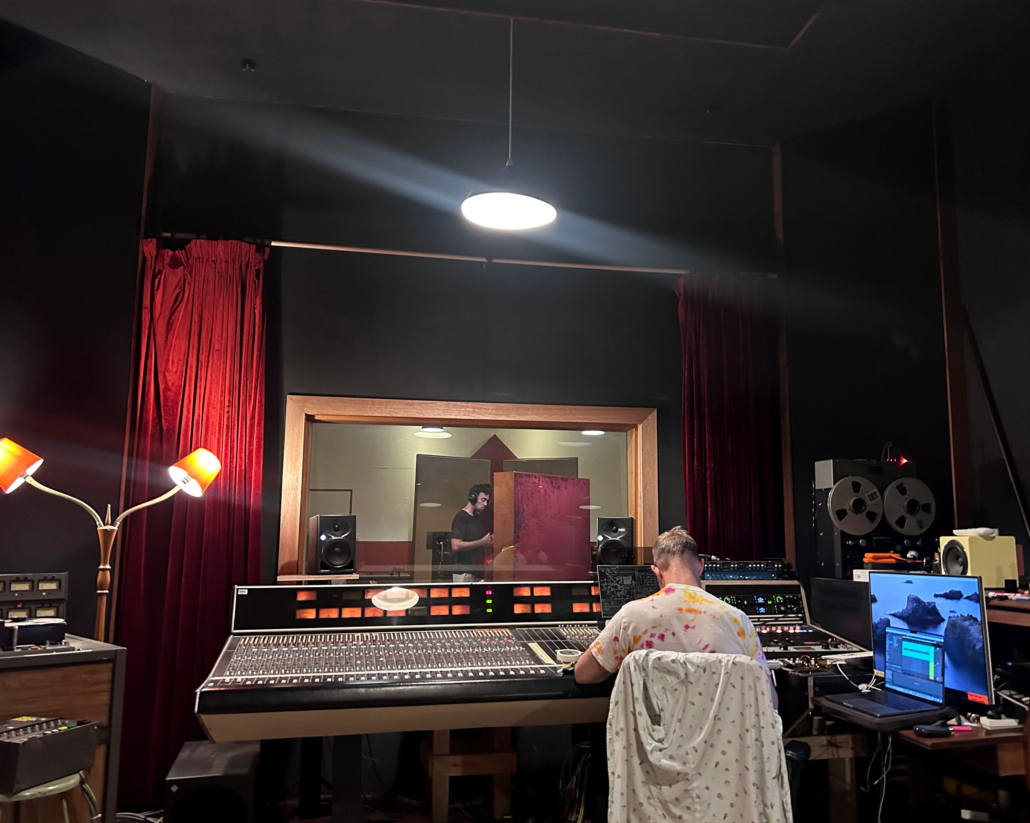
Back in August 2024, the Doldrums and I headed into Stranded Recording Studios.
The Doldrums hail from Wombarra, on Dharawal country, and consist of two long-time friends, neighbours and musical compadres; Michi Hirzel (Sealife Park, Spiderling) and Matt Steffen (Decoder Ring, Toby Martin, Jim Moginie’s Electric Guitar Orchestra).
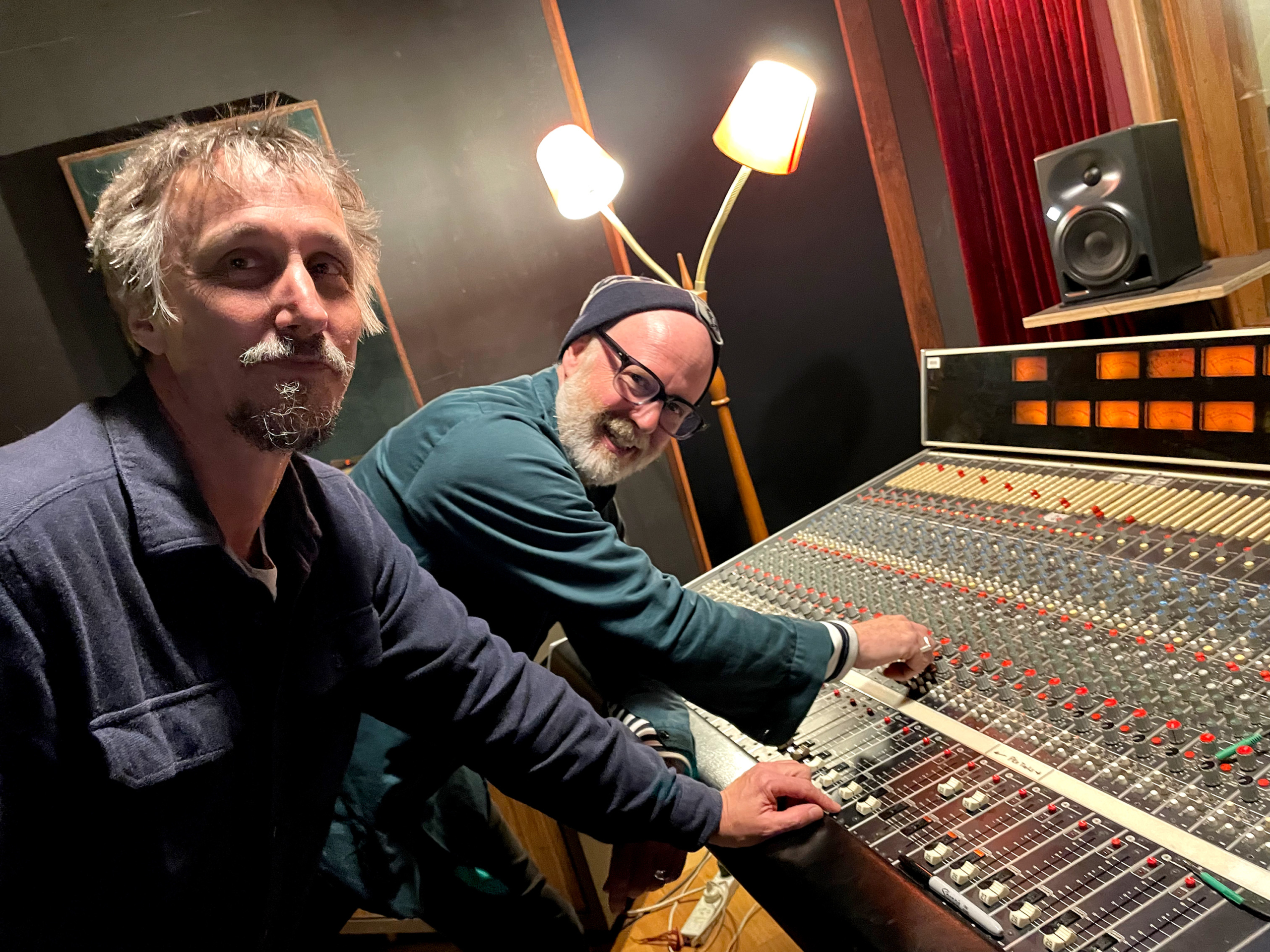
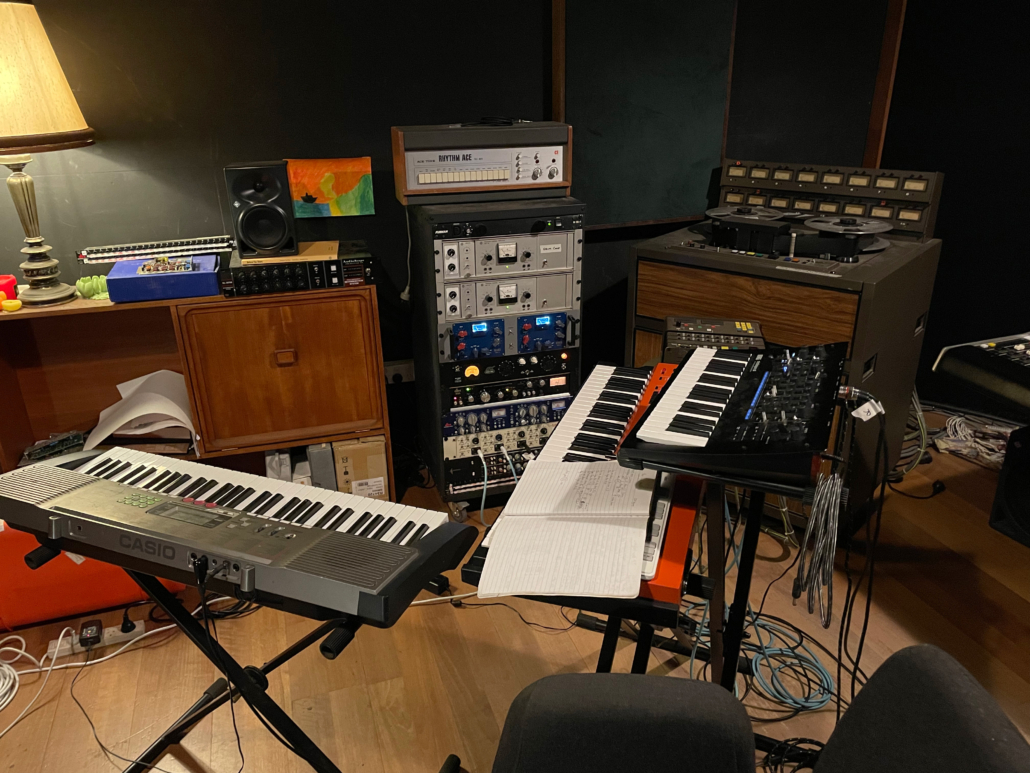
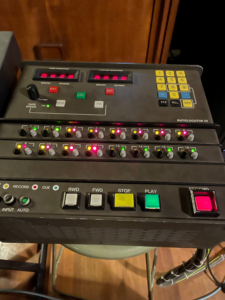
We first started talking about recording their sound in early 2024, and jointly felt that a live to tape machine session at their local South Coast studio Stranded, would be best to capture their dreamy, meandering blend of guitars, drones, drum machines and hazy vocals. We felt that the Doldrums‘ sound would be complimented by the vintage tonal warmth of Stranded Recording Studios‘ MCI JH24 16 Channel 2” tape machine.
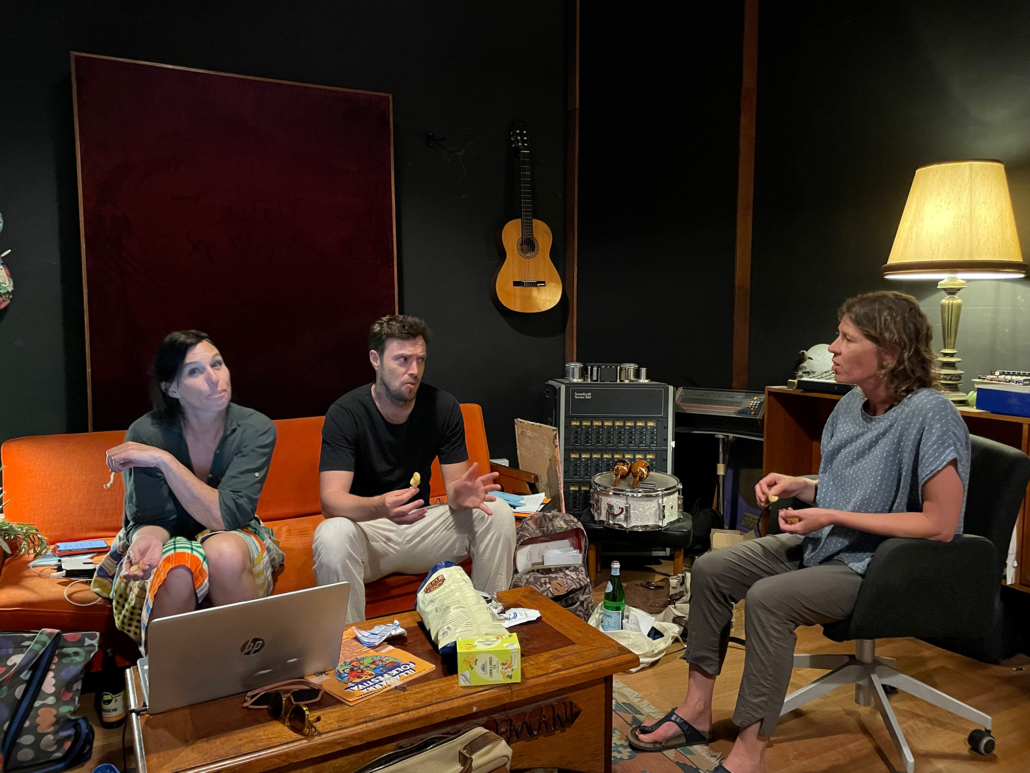
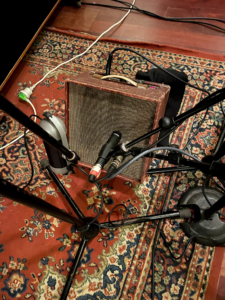
As the duo’s rhythm section is based around drum machines, it allow me to set up Michi and Steff and their guitar amps in the live room at Stranded Studios. Their amps where placed left and right, firing up the length of the live room. I used some baffles down the centre length of the room to reduce the spill at the close mic stage (see the below image). This studio positioning helped to facilitate a nature stereo image of the two guitar sounds, Michi left and Steff right. This was captured via stereo room mics placed left and right at the end of the room. Blending the close guitar mics into the room stereo image was a particular fun aspect in the mixing stage of the record. A full list of the mics used can be found at the end of this post.

The main beds of tracks were captured on 2″ tape and then recorded to Pro Tools. Any further guitar solos and vocals were recorded directly to Pro Tools. The mixes were then taken to completion at my home studio, with a few visits from the lads at the studio.
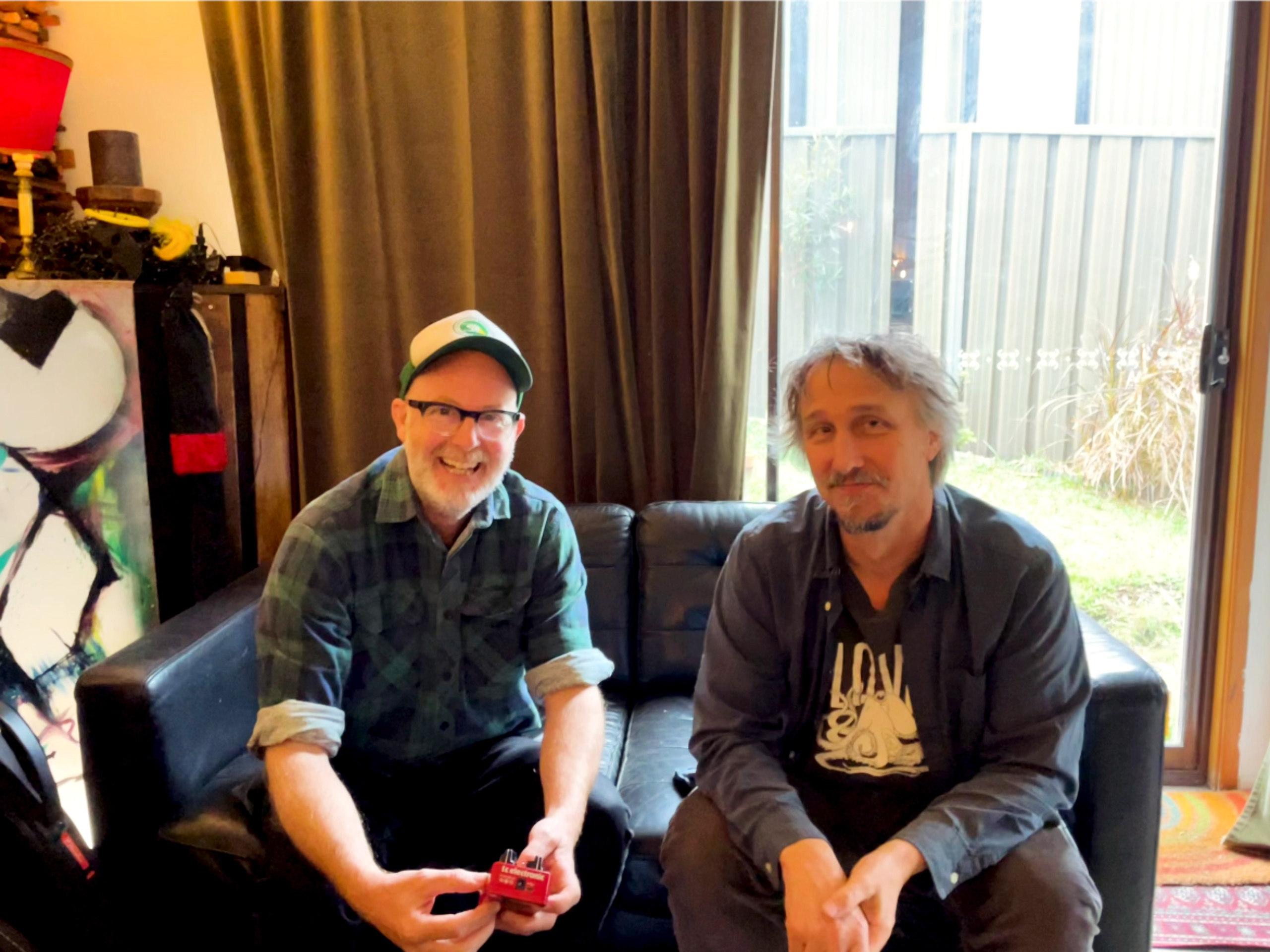
My main reflections on co-producing the record with Michi and Steff include:
It’s both extremely satisfying, and tricky, to work with guitar tones that are breaking up at the amp level. The lads pull some great guitar tones and aren’t afraid to push there small diaphragm amps to the point of breaking up. Heroes in the production suite to control such edgy tones were firstly, the medium of 2″ tape , and then within the mixing phase, modern plugins such as Fab Pro Q3, and frequency specific dynamic control in general.
A second take away would be, not everyone wants or needs Hip Hop drum fatness! Hearing the lads drum machines driven to tape and coming back with a fat, warm tape saturation initial inspired me to make the drums huge via some EQ, compression and parallel compression. Michi and Steff had to tell me to settle down on at least one occasion, and to sit the drums more equally in the mix. At the end of the day the client is always right, and their vision needs to be delivered.
Another reflection would be, it’s a fun challenge working with introspective musicians come vocalists! Steff occasionally graces the tracks with some heartfelt vocals which are meant to act as both a lyric and another instrument layer. Steff was definite that the vocals had to not stand up front like a Pop vocal, but rather, sit right back in the mix and be as hazy and washed out as possible. In this balancing act, I had to incorporate quite a few extended mixing techniques. Firstly, to keep Steff’s vocal audible while using so much reverb and delay, I used side-chain compression on the FXs so that the vocal ducked the FXs volume just a bit to keep Steff’s vocal from being swallowed by the said FXs. Further, to keep the vocal from getting lost in the wall of guitars, I resorted to using Waves F6 on the Guitar Sum Bus, and routing the vocal as the key input/ side-chain compression signal for the guitars, so that the guitars ducked slightly when Steff is singing. I particularly like the F6 plugin as it’s easy to set the compression to occur only in the mids/ and or sides, and at whatever frequency band the vocal is most dominant. As Steff was panned centre, I applied only frequency specific compression in the mids, and at around 2-3kHz.
Michi and Steff, have been active musicians in some notable Sydney bands, see their credentials at the top of this post, and as such, were very good at communicating their aesthetic and sonic desires. They were heavily involved in directing the mixes and co producing this record.
For more information and music from the Doldrums, head to their Instagram, or check them on Spotify. The tracks are being released one by one as singles on Spotify, and the Doldrums’ Bandcamp.
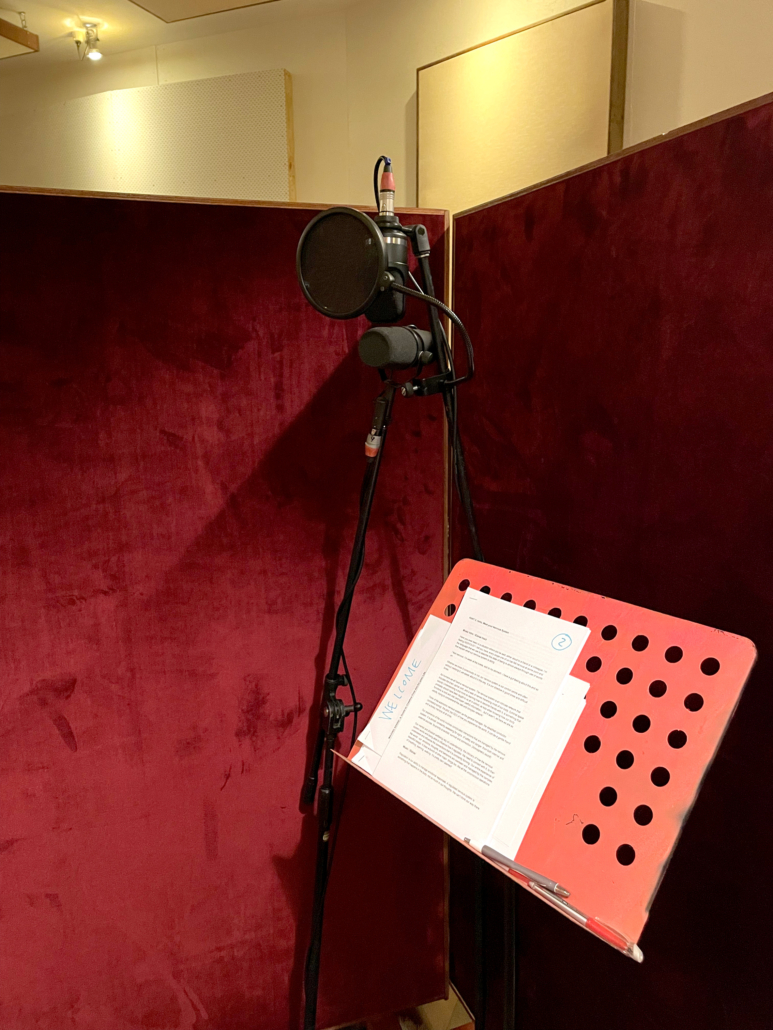
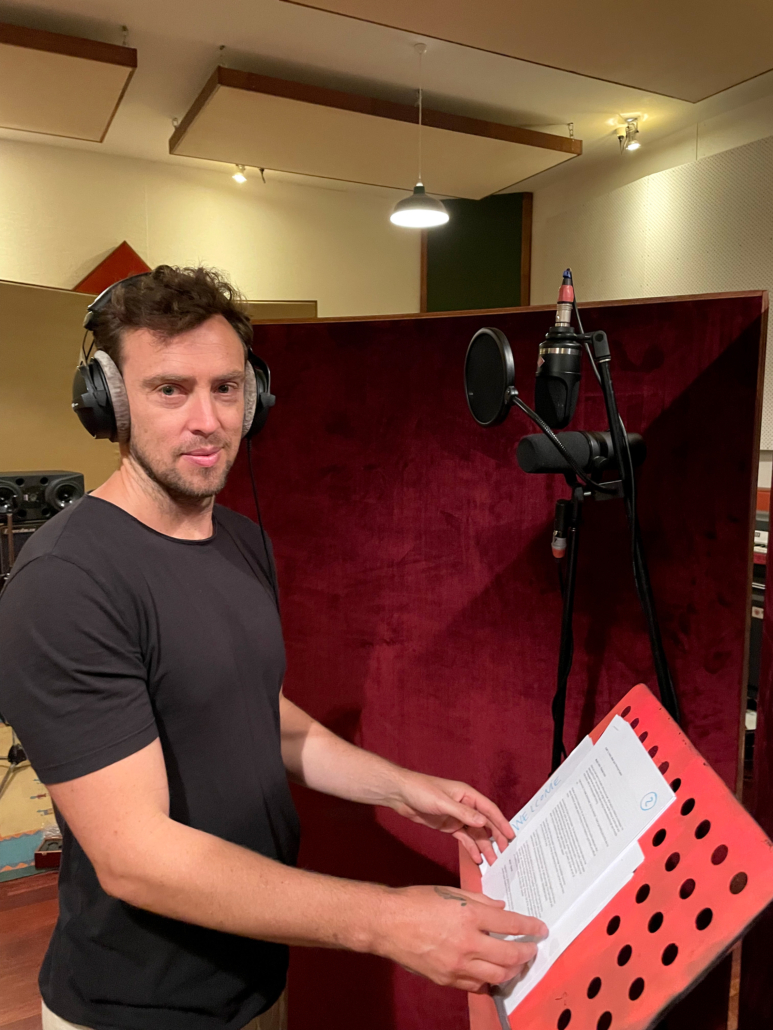
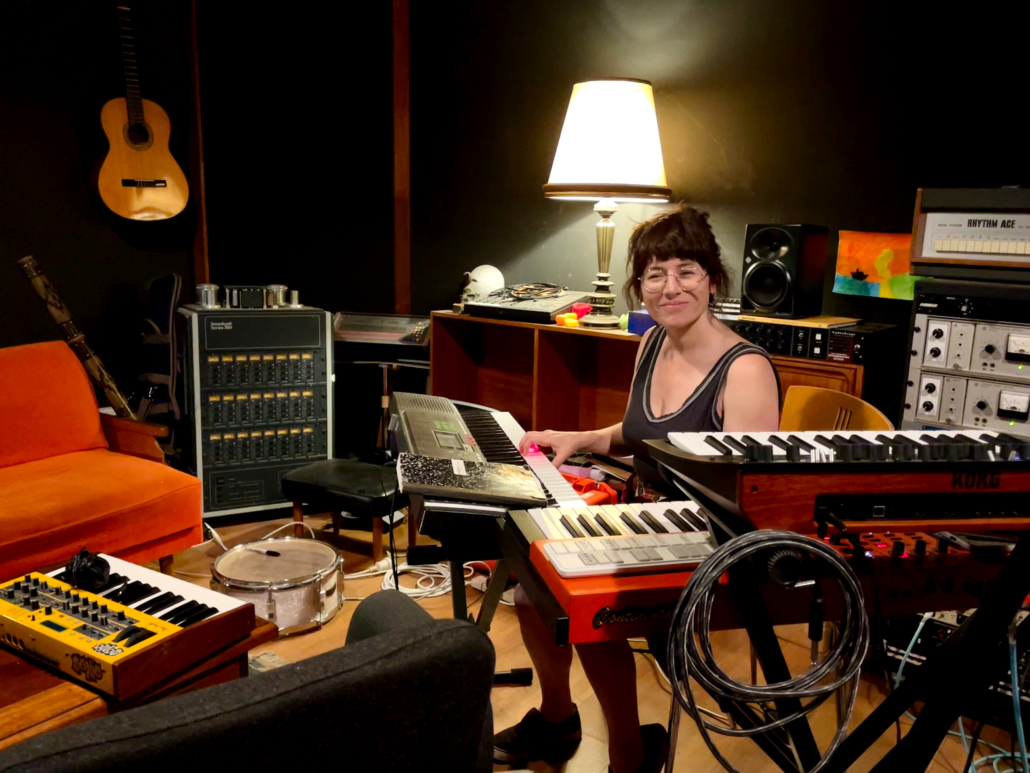
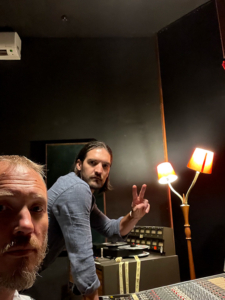
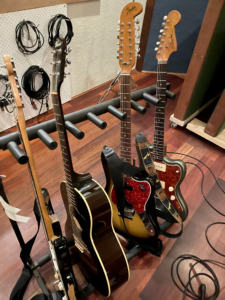
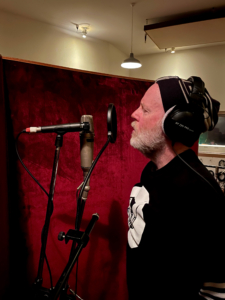
Here are some pictures from the studio sessions
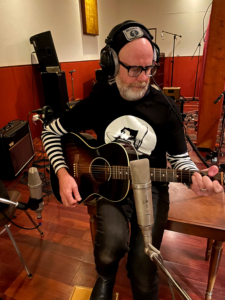
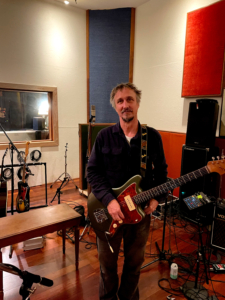
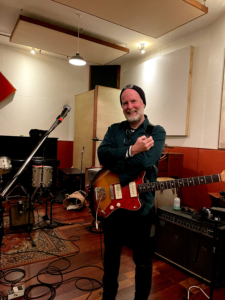
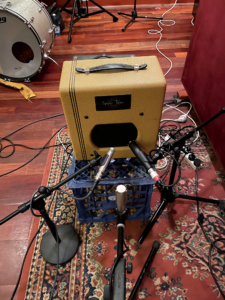

INPUT/ MIC LIST:
Drums:
Radial stereo DI –
Steff Guitar:
Close mics – Shure SM57, Neumann KM84, AEA N-92 ( 1 foot back – to one protect the ribbon, amps were LOUD, and to reduce proximity effect)
the 57 gave bite, the Neumann gave full frequency pick up and shimmer, the B-92 ribbon gave warmth, body and glue.
Michi Guitar:
Close mics – Shure SM57, Neumann KM84, Royer R-121 ( 1 foot back – to one protect the ribbon, amps were LOUD, and to reduce proximity effect)
Similarly, with this array of mics, the mix had tonal options, the 57 gave bite, the condenser the upper brilliance, and the ribbon gave warmth, body, and glued the other mic sounds together.
Live Room Sound:
Neumann U87 stereo pair
as mentioned these were placed at the back of the room, and captured the stereo spread of Michi and Steff’s amps, and provided a natural reverb that was used in most of the mixes.
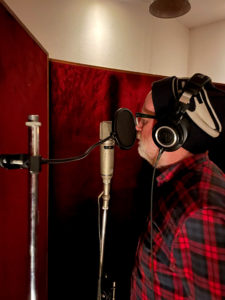
Steff Vocal:
Neumann U87 and Shure SM57
I love blending these mics. The U87 give a full classy body and clarity, whilst the SM57 give that almost nasally mid poke when a sound needs a bit more rawness.
Steff Acoustic Guitar:
Neumann U87 and Senheisser MKH 8040 stereo pairs
Both condenser types worked well, but I think the U87s mostly made the record due to it’s crisp and slightly vintage tone